
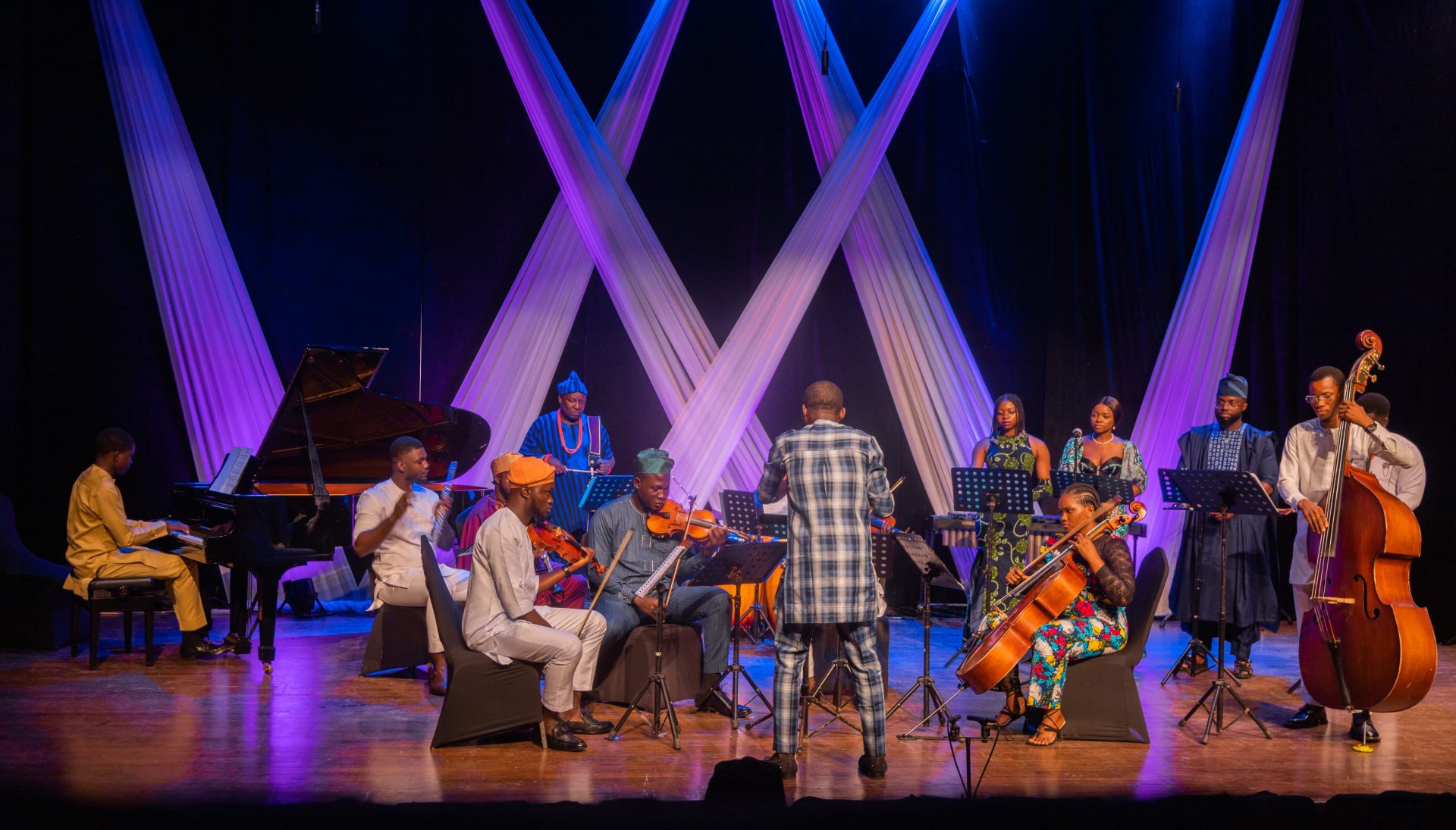
CLASSICAL AFRICANA
Toluwani Ajayi’s orchestral composition “Òjò N Rò” (Rain Is Falling) exemplifies the innovative reinterpretation of traditional melodies with respect and imaginative flair. Grounded in a popular Yoruba children’s folk song, the piece embodies both cultural heritage and novel approaches. What Ajayi achieves here is far more than a simple arrangement; he presents a thoughtful cultural dialogue, giving a centuries-old vocal tune a new symphonic life while placing the double bass – often overlooked as a lead instrument – at the very heart of its storytelling.
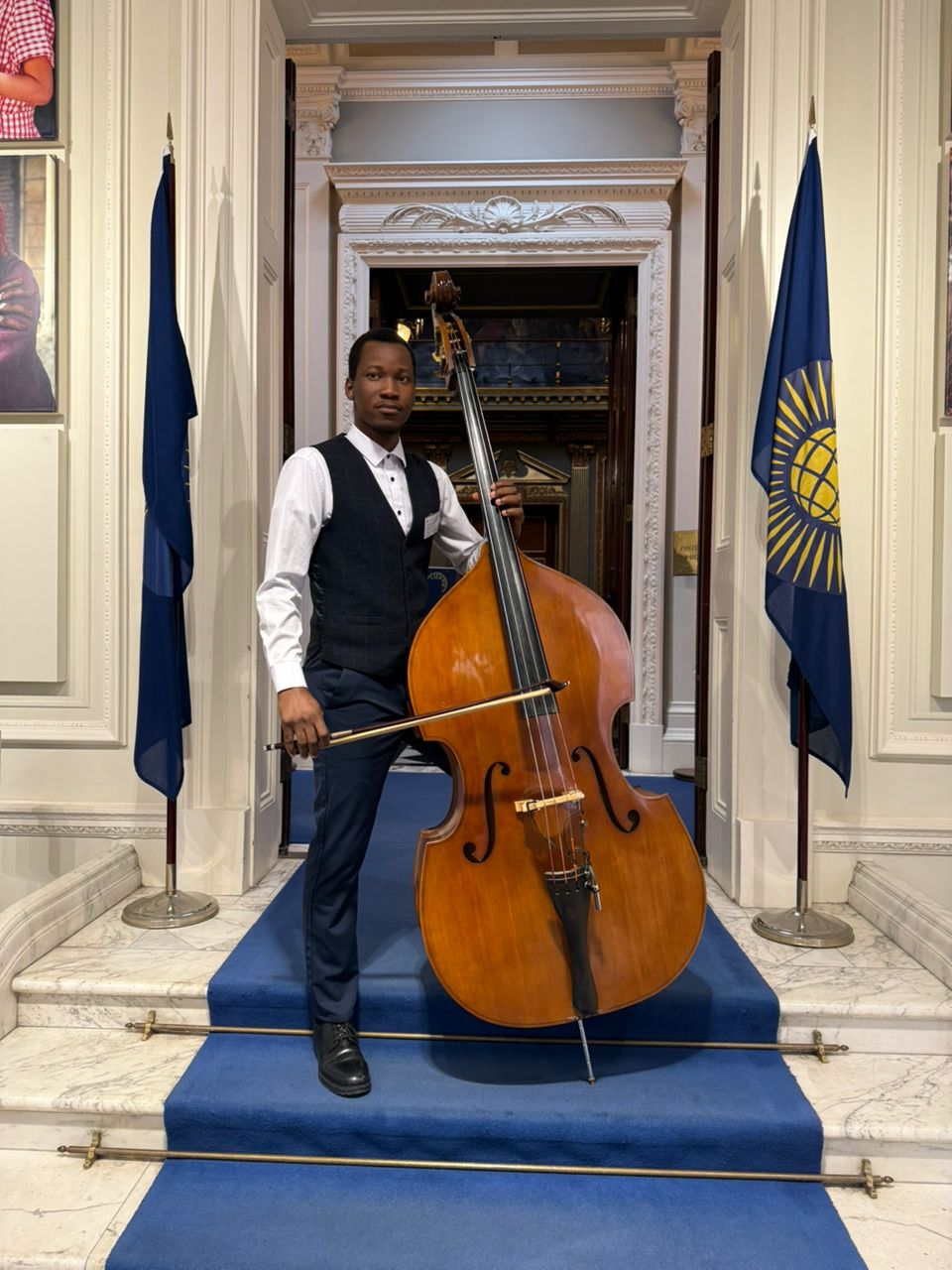
Toluwani Ajayi
The piece, composed and self-produced by Ajayi, is written in D major and orchestrated for instruments from all sections of the Western classical orchestra. The effect is a lively and carefully constructed soundscape. The traditional folk song, often performed by children and their sitters, provides a gentle admonition: Engage in indoor activities, refrain from venturing into the rain, preserve your attire from moisture, and maintain warmth to prevent illness. Its appeal stems from its simplicity; however, Ajayi unveils the inherent emotional strength of its melody by developing it into a comprehensive symphonic arrangement.
The piece begins with a subdued piano melody, emulating the sound of rain: light, continuous, and atmospheric. With the ensemble’s entrance, the clarinets, flute, and bassoon coalesce to generate an atmospheric texture, thereby establishing the foundation for a composition designed to employ sound as a medium for artistic expression. The solo double bass’s entrance is characterised by unexpected grace. Ajayi’s rendition captures the melodic line with a warm, vocal-like expressiveness, reflecting the timbre and phrasing of an elder Yoruba folk singer – calm, reassuring, and wise. This deliberate tribute to oral tradition gives the instrument a voice that surpasses its conventional function.
The musical arrangement further develops the imagery. The bass drum establishes the gravitas of oncoming thunder, whereas the timpani contribute a rolling resonance that implies a distant storm’s approach. The strings’ rhythmic fluctuations evoke the enduring quality of rainfall and the fleeting nature of a passing shower. Every instrument contributes meaningfully, amplifying the emotional progression while maintaining focus on the core concept. A potential experiment has been transformed into a well-structured and sophisticated classical composition, appealing to both casual and expert listeners.
“Òjò N Rò” is most notably distinguished by its unique utilisation of the double bass as the central melodic element. Within the Western classical tradition, the double bass is appreciated for its depth, harmonic foundation, and contribution to the orchestra’s overall sound. It is infrequently chosen to serve as the lead narrator. Ajayi confidently contests this norm, showcasing the instrument’s lyrical versatility and its aptitude for preserving cultural memory. The performance’s nuanced quality is apparent in its juxtaposition of elements: soft legato segments represent parental care, while bursts of intense energy reflect the necessity of safeguarding children during a downpour. This showcases musical storytelling in its most refined form.
Ajayi’s artistic development is even more remarkable when considered within the context of his career. His birth in Ibadan and upbringing, in part, in Lagos, have contributed to his status as a respected double bassist in Nigeria. Although he was formally educated as a mechanical engineer, he dedicated himself to music, successfully obtaining ABRSM certifications in theory and performance. His artistic skills were honed through masterclasses led by globally renowned musicians, including Chi-Chi Nwanoku CBE and Walter Michael Vollhardt, who are celebrated for their demanding musical standards and precise expressiveness.
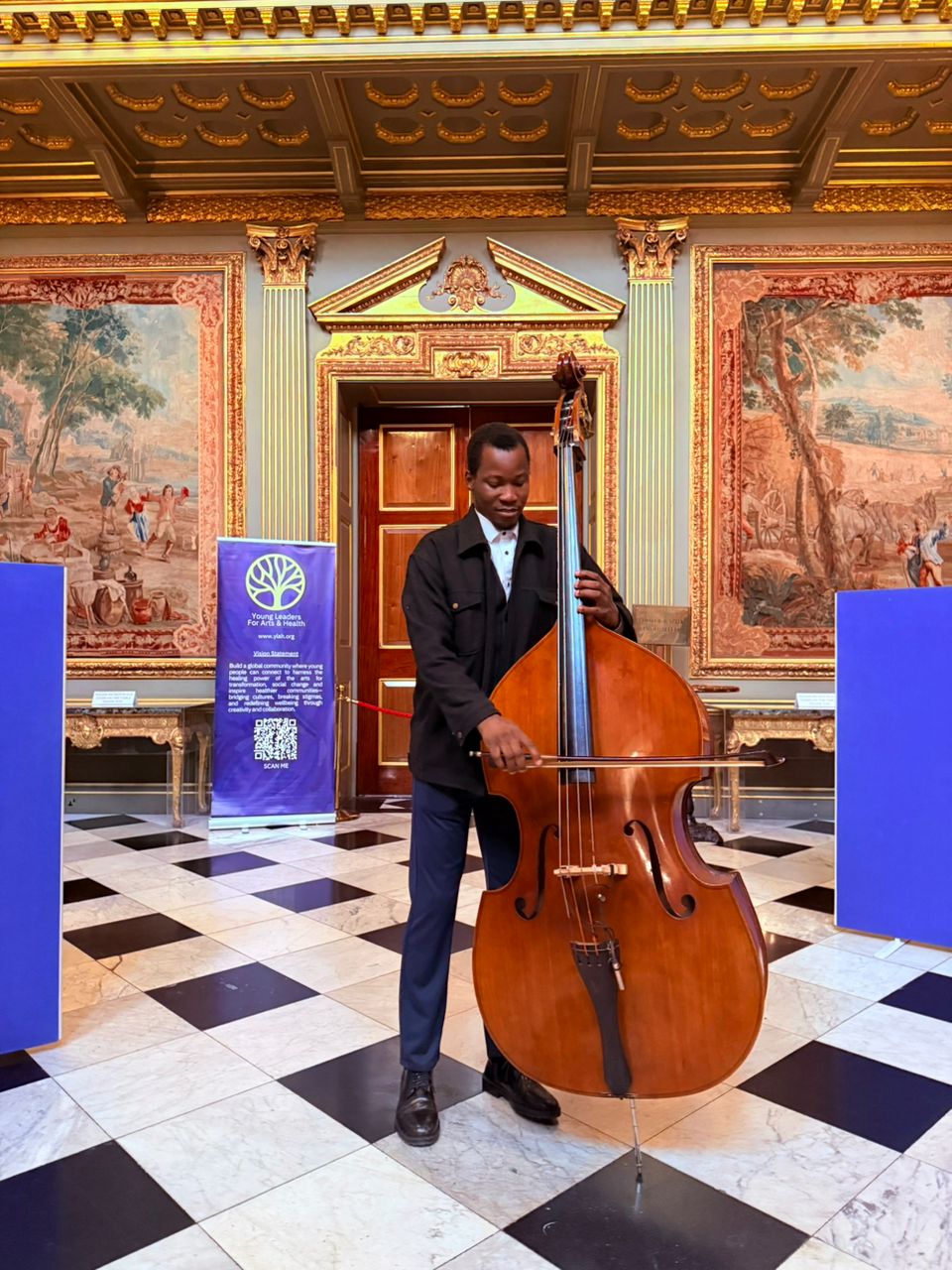
Ajayi has performed with diverse orchestras in Nigeria and the United Kingdom, including the Divine Symphony Orchestra, Vesta Orchestra and Opera Foundation, and recently the East London School of Classical Music and the HACS Philharmonic Orchestra, where he is the Principal Bassist. Beyond the concert hall, he has been an active participant in the Global Arts in Medicine Fellowship since 2017, utilising music to foster recovery in hospitals, correctional facilities, and community environments. Reflecting a firm belief in the transformative potential of music, he has contributed to arts-and-health initiatives, such as international collaborations with the WHO and the US Consulate.
“Òjò N Rò” reflects every aspect of Ajayi’s identity, including his identity as a classical musician, cultural preserver, and promoter of musical wellness. This reinforces both his versatility and artistic sensitivity, providing audiences with an innovative means of interacting with Yoruba musical heritage. The resulting piece is a refined, inventive, and culturally relevant creation, which encourages audiences to find value in the beauty of tradition through the comprehensive sound of the orchestra.
Segun Martins Fajemisin – publisher and social commentator – delves into the vibrant world of entertainment with a discerning perspective. While he explores the broader cultural landscape, his genuine passion lies in classical music, particularly African art music, where history and innovation create a symphony of storytelling. He writes in from London, United Kingdom
© Feferity Media Group 2026